Your email list isn’t just a database; it’s a living ecosystem. For CMOs, founders, and strategic marketers, maximizing engagement isn’t a vanity metric—it’s the bedrock of sustainable growth. This article dissects how Polayads
transforms stagnant email campaigns into dynamic revenue generators, offering
actionable frameworks and insights that yield demonstrable returns. We pull
back the curtain on cutting-edge strategies, drawing from 2025 and 2026 data
trends to equip you with the advanced tactics necessary to dominate the inbox.
In a crowded digital landscape, generic messaging is a digital dead end. Your
customers expect relevance, and advanced segmentation is the precision tool
that delivers it.
Beyond Demographics: Behavioral Segmentation
Traditional demographic segmentation is a starting point, not a destination.
Sophisticated email programs now pivot on how users interact with your brand.
Imagine your customer base as a complex neural network, each user firing
unique signals.
For example, tracking product page views, time spent on-site, content
downloads, and previous purchase history allows for the creation of behavioral
segments. A user browsing high-end cameras versus one viewing entry-level DSLRs
requires distinctly different messaging and product recommendations.
Engagement Tiers: Identifying Your Champions and Sleepers
Not all subscribers are created equal. Segmenting by engagement levels—active
(opened/clicked in last 30 days), sporadic (opened/clicked in last 90 days),
and dormant (no activity in 90+ days)—is crucial. High-engagement segments
are prime for exclusive offers and loyalty programs, while dormant segments
require re-engagement strategies tailored to reignite interest, not alienate with
generic promotions. Prioritizing these “champions” directly impacts immediate
revenue.
Customer Value: Rewarding Your Most Loyal
Customer Lifetime Value (CLTV) is a critical metric for segmentation.
High-value customers warrant white-glove treatment: early access to new
products, personalized recommendations based on their purchase history, and
exclusive discounts. This strategy not only fosters loyalty but also
maximizes upselling and cross-selling opportunities implicitly. Contrast this
with new customers who might receive onboarding flows focused on education and
initial value proposition.
Email marketing remains a powerful tool for businesses looking to engage with their audience effectively. For those interested in exploring comprehensive marketing solutions that can enhance their email campaigns, a related article can provide valuable insights. You can read more about this topic in the article titled “Why Use Polayads Marketing Solutions” available at this link.
Redefining the Inbox: Subject Line Innovation and Personalization
The inbox is a battlefield for attention. Winning requires more than just a
catchy phrase; it demands a strategic arsenal of personalization and urgency.
Crafting Irresistible Openers
In 2026, subject lines are no longer just titles; they are micro-CTAs. They
must convey urgency, create curiosity, or offer immediate value.
Personalization, such as “Natasha, see what everyone’s talking about!”, elevates
relevance by addressing the recipient directly. Emojis, when used
strategically and not excessively, can increase open rates by adding visual
appeal and conveying emotion without consuming valuable character count. The
key is testing. A/B tests on subject lines are non-negotiable for identifying
what resonates with your specific audience.
The Power of Hyper-Personalization
Beyond a first name, hyper-personalization leverages real-time data to create
a bespoke email experience. This isn’t just about suggesting products they’ve
viewed; it’s about anticipating their needs based on their entire digital
footprint. Consider a customer who frequently purchases fitness equipment. An
email featuring new resistance bands and personalized workout routines, rather
than a generic sales flyer, demonstrates an understanding of their ongoing
journey. Behavioral triggers—like an abandoned cart or a recent product
review—should directly inform the content and timing of subsequent emails,
turning data into direct, actionable communication.
The Automation Avalanche: Scaling Engagement With Intelligent Flows
Manual email sending is obsolete. Automation is the engine that drives
consistent, timely, and relevant communications at scale, meeting customer
expectations for instant interaction.
Onboarding: The First Impression Paradigm
Onboarding flows are your digital handshake. They introduce your brand,
articulate your value proposition, and guide new subscribers toward their
first meaningful interaction. A seamless signup process, immediate welcome,
and delivery of initial value (e.g., a downloadable guide or a welcome
discount) are crucial. A well-optimized onboarding flow builds trust from day
one, reducing churn and accelerating the path to conversion. Aim for low-
friction experiences that guide the user effortlessly through their initial
journey.
Lifecycle Automation: Nurturing Every Stage
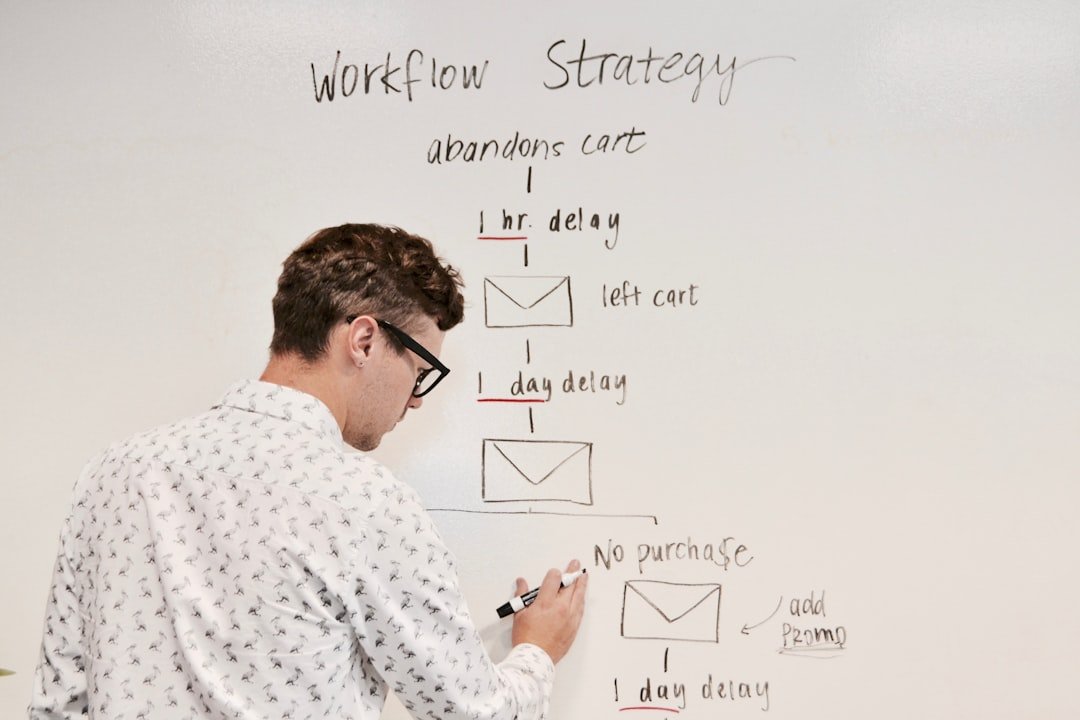
The customer journey is rarely linear. Automated flows—welcome sequences, cart
abandonment reminders, post-purchase follow-ups, win-back campaigns, and
reactivation emails—ensure that your brand remains top-of-mind at every stage.
For example, a post-purchase flow might offer complementary products or solicit
product reviews, enhancing customer satisfaction and loyalty. Conversely, a win-
back campaign for inactive users could offer an exclusive incentive to re-
engage, preventing customer attrition. These automated sequences are designed
to anticipate and respond to customer actions (or inactions) in real-time,
creating a continuous loop of engagement.
Real-Time Triggers for Maximal Impact
Beyond standard lifecycle flows, real-time triggers represent the apex of
email automation. These are emails fired instantaneously based on a specific
customer action. Imagine a customer adding a high-value item to their cart but
not converting. A real-time triggered email within minutes offering a small
incentive or addressing common FAQs can significantly boost conversion rates.
Similarly, a customer engaging with a specific content piece on your blog can
trigger a follow-up email providing a deeper dive into that topic or related
products, further cementing their interest.
Interactive Email: The Future of Engagement is Now

The static email is a relic. Interactive elements, poised for near-100%
adoption in 2026, transform the inbox into a dynamic experience.
Gamification & Instant Feedback
Interactive elements are not mere novelties; they solve a critical engagement
challenge. Live polls, sentiment trackers, image carousels, and scratch-off
promotions inject dynamism directly into the email. Consider a beauty brand
using an interactive quiz in an email to recommend products based on skin type.
Or a travel company deploying a live poll asking about destination preferences,
then tailoring subsequent offers. These elements drastically increase both
engagement rates and data capture, providing immediate feedback and
personalized pathways. This turns a one-way communication channel into a
multi-directional conversation.
Enhancing User Experience (UX)
Interactive emails provide immediate value within the email itself, reducing
click-through friction. Instead of redirecting users to a landing page for
every interaction, elements like carousels allow product browsing directly in
the inbox. This streamlined experience fosters a sense of effortless
engagement, making the user’s journey more enjoyable and less fragmented. The
goal is to provide a rich, app-like experience without leaving the email client.
Email marketing remains a powerful tool for businesses looking to engage with their customers effectively. To enhance your email marketing strategy, you might find it beneficial to explore related insights on optimizing e-commerce strategies. A great resource for this is an article that discusses various tactics to improve your online sales performance. You can read more about it in this article, which offers valuable tips that can complement your email marketing efforts.
Integrated Strategy: Unifying Your Martech Stack
| Metric | Description | Typical Range | Importance |
|---|---|---|---|
| Open Rate | Percentage of recipients who open the email | 15% – 30% | High |
| Click-Through Rate (CTR) | Percentage of recipients who click on links within the email | 2% – 10% | High |
| Conversion Rate | Percentage of recipients who complete a desired action after clicking | 1% – 5% | High |
| Bounce Rate | Percentage of emails that could not be delivered | 0.5% – 2% | Medium |
| Unsubscribe Rate | Percentage of recipients who opt out from the mailing list | 0.1% – 0.5% | Medium |
| Spam Complaint Rate | Percentage of recipients marking the email as spam | 0.01% – 0.1% | High |
| List Growth Rate | Rate at which the email list is growing | 1% – 5% monthly | Medium |
| Forwarding/Share Rate | Percentage of recipients who share the email with others | 0.2% – 1% | Low to Medium |
| ROI (Return on Investment) | Revenue generated compared to cost of email marketing | 300% – 4000% | High |
Email doesn’t operate in a vacuum. Its true power is unleashed when integrated
seamlessly with other marketing channels, creating a unified customer
experience.
Cross-Channel Synergy
Your customer interactions aren’t confined to email. They traverse social
media, SMS, push notifications, and your website. A fragmented customer profile
leads to disjointed messaging, and a frustrated customer. Polayads advocates
for a unified customer profile that synthesizes data from all touchpoints.
This allows for consistent messaging and real-time triggers across channels. If a
customer abandons a cart, an email might be sent first. If unopened, an SMS or
push notification could follow. This orchestration ensures that messages are
not only relevant but also delivered through the most effective channel at that
moment.
Data-Driven Content Strategy
The content you deliver must be high-value and purpose-driven, moving beyond
mere promotional blasts. Based on 2025 data analysis, high-value content such
as detailed guides, checklists, and educational resources significantly
outperforms generic newsletters in fostering long-term engagement and trust.
Analyze your top-performing content assets, identifying themes and formats
that resonate with your audience. This data then informs your email content
strategy, ensuring that every send provides genuine value and isn’t just
another item in a crowded inbox. A/B test various content formats and CTAs (e.g.,
‘Buy now’ vs. ‘Learn more’) to continuously refine what drives clicks and
conversions.
The Continuous Optimization Loop: Test, Learn, Adapt
Settling for “good enough” in email marketing is a business gamble. A
rigorous, data-driven optimization process is essential for sustained
performance.
A/B Testing Every Element
From subject lines and pre-headers to content layouts, images, and calls-to-
action (CTAs), everything is a hypothesis waiting to be tested. Do your
customers respond better to ‘Shop Now’ or ‘Explore Collection’? Does a hero
image with a human face outperform a product-only shot? Systematic A/B
testing provides empirical answers, informing design and content choices that
directly impact engagement and conversion rates. This iterative process
continuously refines your email strategy, ensuring it remains agile and
responsive to audience preferences.
Analyzing Performance Metrics
Beyond open and click-through rates, delve into metrics like conversion rates
per email, revenue per email sent, and unsubscribe rates. These deeper
insights paint a more accurate picture of campaign effectiveness. Analyze
which segments respond best to specific content types or offers, and replicate
those successes. Understanding the ‘why’ behind the numbers is crucial for
strategic adaptation. This analytical rigor transforms raw data into
actionable intelligence, driving continuous improvement and maximizing ROI on
your email marketing efforts.
Conclusion
Maximizing email engagement is no longer about sending emails; it’s about
orchestrating highly personalized, interactive, and automated customer journeys
that resonate deeply and drive measurable results. By embracing advanced
segmentation, pioneering interactive elements, leveraging intelligent
automation, and integrating across channels, you transform your email strategy
from a broadcast mechanism into a sophisticated conversation engine. This
proactive approach not only deepens customer relationships but also positions
your brand as a leader in a perpetually evolving digital landscape.
Your inbox is a direct line to your customer’s attention and wallets. Are you
using it to its full potential, or are you still relying on tactics designed for
yesterday’s internet? The opportunity for hyper-engaged, highly profitable
email marketing is not coming; it’s already here.
FAQs
What is email marketing?
Email marketing is a digital marketing strategy that involves sending emails to a targeted group of recipients to promote products, services, or share information. It is used to build relationships with potential and existing customers, increase brand awareness, and drive sales.
What are the benefits of email marketing?
Email marketing offers several benefits including cost-effectiveness, direct communication with customers, measurable results through analytics, personalization options, and the ability to reach a large audience quickly. It also helps in nurturing leads and increasing customer loyalty.
How do businesses build an email marketing list?
Businesses build email marketing lists by collecting email addresses through website sign-ups, social media campaigns, events, and promotions. It is important to obtain consent from recipients to comply with legal regulations such as GDPR and CAN-SPAM.
What types of emails are commonly used in email marketing?
Common types of emails in email marketing include newsletters, promotional offers, product announcements, event invitations, welcome emails, and transactional emails like order confirmations and shipping notifications.
How can the effectiveness of an email marketing campaign be measured?
The effectiveness of an email marketing campaign can be measured using metrics such as open rates, click-through rates, conversion rates, bounce rates, and unsubscribe rates. These metrics help marketers understand engagement levels and optimize future campaigns.