
Your revenue forecasts are likely wrong. Not just a little off, but fundamentally flawed because they’re built on backward-looking data and a gut feeling for future performance. This isn’t a minor accuracy issue; it’s a systemic impediment to predictable, profitable growth and a direct drain on capital efficiency.
The problem festers at the heart of strategic planning: allocating resources based on optimistic guesswork rather than data-driven probability. CMOs build campaigns, CFOs approve budgets, and founders set expansion targets—all underpinned by a revenue number that lacks modern predictive rigor. This article dissects how advanced predictive analytics transforms revenue forecasting from an art into a science, forging a robust foundation for your entire growth architecture.
The Unseen Cost of Imperfect Forecasts
Traditional forecasting methods, often reliant on historical trends and CRM-reported pipeline, are inherently reactive. They tell you what has happened or what might happen based on past patterns. This approach fails to capture the dynamic interplay of market forces, sales execution variables, and emerging customer behaviors.
The financial repercussions are severe:
- Suboptimal Capital Allocation: Funds are misdirected towards initiatives based on inflated revenue projections, starving more profitable ventures.
- Bloated Operating Costs: Overstaffing, excess inventory, or premature infrastructure expansion, all rooted in over-forecasted demand.
- Lost Opportunity: Under-forecasting can lead to insufficient sales capacity or product availability, missing out on genuine market demand.
- Erosion of Investor Confidence: Repeatedly missing targets signals a lack of strategic foresight and operational control.
Predictive analytics offers a corrective lens, enabling proactive decision-making that optimizes resource deployment and hardens your growth strategy. It moves beyond simple correlation to identify causation, offering a probabilistic view of your future revenue landscape.
Forecasting based purely on historical revenue growth is like driving a car while looking only in the rearview mirror. It provides context but offers no insight into the turns ahead. Predictive analytics, in contrast, leverages sophisticated statistical models and machine learning to analyze vast datasets, identify complex patterns, and estimate future outcomes with a quantifiable probability. It’s not about guessing; it’s about statistically informed anticipation.
The Dynamics of Modern Revenue Prediction
Modern revenue prediction integrates a multitude of data points that traditional methods overlook:
- CRM Data: Not just stage and amount, but activity levels, engagement metrics, and historical win/loss ratios by salesperson and segment.
- Marketing Automation Data: Engagement rates, content consumption patterns, lead scoring changes, and campaign performance across all channels.
- Economic Indicators: Macroeconomic trends, industry-specific growth rates, and regional economic health.
- Competitor Activity: Market share shifts, new product launches, and pricing strategies.
- Customer Behavioral Data: Usage patterns, product adoption rates, sentiment analysis from support interactions, and churn risk indicators.
- External Data Sources: Weather patterns (for specific industries), demographic shifts, and regulatory changes.
The goal is to build a comprehensive, multi-variate model that captures the nuanced drivers of revenue, rather than relying on a few isolated variables.
From Correlation to Causation: Deeper Insights
Early forms of predictive analytics often focused on correlation. However, true predictive power emerges from understanding causation. For instance, an increase in website traffic might correlate with higher revenue, but predictive analytics can determine which specific traffic sources (e.g., organic search for X keywords, paid ads on platform Y) lead to qualified leads that convert at predictable rates for specific product lines. This level of granularity informs strategic investment and operational adjustments.
In exploring the significance of predictive analytics in revenue forecasting, it is also beneficial to consider how social media strategies can enhance overall business performance. An insightful article that delves into this topic is “Maximize Your Social Media Impact,” which discusses effective techniques for leveraging social media to drive engagement and increase revenue. For more information, you can read the article here: Maximize Your Social Media Impact.
Architecting Your Predictive Revenue Engine
Building a robust predictive revenue engine is a strategic undertaking, not merely a software implementation. It requires a fundamental shift in how your organization views and utilizes data, demanding executive sponsorship and cross-functional collaboration.
Data Infrastructure: The Foundation of Foresight
The efficacy of any predictive model hinges on the quality and accessibility of its data. GIGO (Garbage In, Garbage Out) remains a cardinal rule.
- Unified Data Lakes: Consolidate data from CRM, marketing automation, ERP, customer success platforms, and external sources into a single, accessible data lake. This breaks down silos and provides a holistic view of the customer journey.
- Data Cleansing and Standardization: Implement rigorous processes for data validation, de-duplication, and standardization. Inconsistent data entry or format variations cripple model accuracy.
- Real-time Data Streams: Where feasible, establish real-time or near real-time data ingestion pipelines. Revenue drivers change rapidly, and models need to reflect the most current state.
Model Selection and Training: Precision in Prediction
Choosing the right predictive model depends on the complexity of your business, the volume of your data, and the specific questions you need answered.
- Regression Models: Useful for identifying relationships between a dependent variable (revenue) and one or more independent variables.
- Time Series Models (ARIMA, Exponential Smoothing): Effective for identifying trends and seasonality in historical revenue data.
- Machine Learning Algorithms (Random Forests, Gradient Boosting, Neural Networks): Capable of uncovering complex, non-linear relationships and interactions among numerous variables, offering superior accuracy for intricate revenue prediction problems.
- Ensemble Models: Combining multiple models to leverage their individual strengths and mitigate weaknesses, often yielding more robust and accurate predictions.
Model training involves feeding the algorithm vast historical data to learn patterns and relationships. This process requires expert data scientists and iterative refinement.
Validation and Iteration: Ensuring Accuracy and Trust
A model is only as good as its tested accuracy. Continuous validation and iteration are critical.
- Backtesting: Applying the model to historical data to see how accurately it would have predicted past outcomes.
- Out-of-Sample Testing: Using data not included in the training set to evaluate the model’s generalization capabilities.
- MAPE, RMSE, R-squared: Key statistical metrics to quantify model accuracy and compare different approaches.
- Explainable AI (XAI): Understanding why a model makes a certain prediction builds trust and facilitates better decision-making. Black-box models, while potentially accurate, can hinder adoption by executive teams.
Financial Precision Through Predictive Confidence
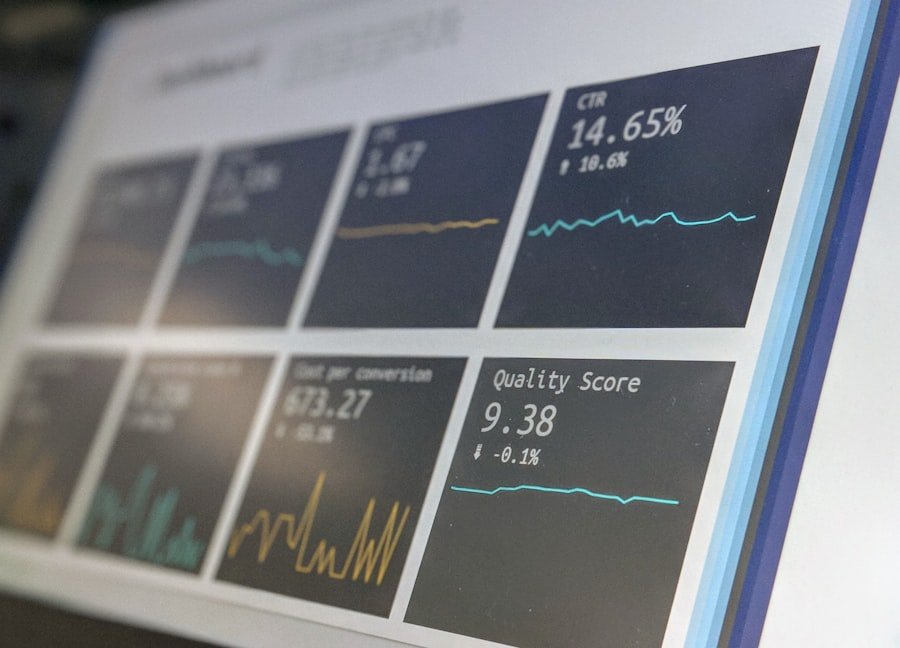
Predictive analytics doesn’t just provide a number; it provides a prediction with a probability distribution. This distinction is paramount for capital efficiency and disciplined financial planning. Instead of a single, rigid forecast, you gain a probable range, allowing for more agile and risk-adjusted strategic choices.
Probabilistic Forecasting: Quantifying Uncertainty
Traditional forecasts often present a single “best guess.” Predictive analytics, however, offers a range of potential outcomes with associated probabilities.
- Confidence Intervals: Instead of “we will make $20M,” the forecast becomes “there’s a 90% chance we’ll make between $18M and $22M.”
- Scenario Planning: This probabilistic view empowers CFOs to model various scenarios—optimistic, realistic, pessimistic—and understand the financial implications of each. What if lead conversion drops by 5%? What if the average deal size increases by 10%?
- Risk-Adjusted Budgeting: Budgets can be allocated based on the probability of hitting certain revenue tiers, rather than a single, potentially unachievable target. This mitigates financial exposure.
Optimizing Resource Allocation: Capital Efficiency Unleashed
With a higher degree of certainty about future revenue, organizations can allocate capital and operational resources much more efficiently.
- Dynamic Sales Capacity Planning: Predictive models can forecast future sales demand with enough lead time to adjust hiring plans, training initiatives, and territory assignments. This avoids costly overstaffing during slow periods and prevents lost revenue due to understaffing during growth spurts.
- Targeted Marketing Spend: Understanding which channels and campaigns are most likely to drive high-value, converting leads allows for real-time optimization of marketing budgets, shifting spend to highest-ROI activities as predicted by model outcomes.
- Inventory and Supply Chain Optimization: For product-based businesses, accurate demand forecasting (driven by predictive revenue insights) directly reduces carrying costs, minimizes stockouts, and optimizes supply chain logistics.
Unlocking New Growth Opportunities and Mitigating Risk

Predictive analytics extends beyond just predicting the future; it helps shape it. By identifying underlying drivers and potential deviations, it empowers leaders to proactively intervene, capitalize on emerging opportunities, and neutralize threats before they materialize.
Early Warning Systems for Revenue Attrition
One of the most valuable applications of predictive analytics is identifying potential revenue erosion before it impacts the bottom line.
- Churn Prediction: Models can analyze customer engagement, support ticket history, product usage patterns, and past churn incidents to identify customers at high risk of churning. This triggers proactive customer success interventions.
- Pipeline Health Monitoring: Beyond just tracking deal stages, predictive models assess the health of the entire sales pipeline, flagging deals that are decelerating, showing low engagement, or have an unusually high probability of falling through, allowing for mid-quarter course corrections.
- Market Shift Detection: By continuously monitoring external data sources, models can signal early indicators of market contraction, new competitive threats, or changing customer preferences, giving leadership a crucial advantage in adapting strategy.
Identifying Untapped Market Segments and Product Opportunities
Predictive insights don’t just forecast existing revenue streams; they can illuminate entirely new avenues for growth.
- Next-Best-Offer/Cross-Sell/Upsell: By analyzing customer purchase history, usage data, and behavioral patterns, models can predict which customers are most likely to buy additional products or higher-tier services, enabling highly targeted and effective sales motions.
- Market Segmentation and Personalization: Deeper insights into customer behavior allow for more granular segmentation, leading to highly personalized marketing and sales strategies that resonate more effectively and drive higher conversion rates.
- Product Development Prioritization: Predicting future market demand and customer needs based on evolving trends provides invaluable input for R&D, ensuring product development aligns with profitable future opportunities.
In exploring the significance of predictive analytics in revenue forecasting, it is also valuable to consider how marketing analytics can enhance overall business strategies. A related article discusses the impact of data insights on marketing effectiveness and decision-making processes. For more information, you can read about it in this insightful piece on marketing analytics. This connection highlights the broader implications of data-driven approaches in various aspects of business management.
Organizational Alignment: A Culture of Data-Driven Growth
| Metrics | Description |
|---|---|
| Historical Data | Data from past sales, customer behavior, and market trends used to identify patterns and trends. |
| Accuracy | The degree to which the predictive analytics model’s forecasts align with actual revenue outcomes. |
| Forecasting Models | Various statistical and machine learning models used to predict future revenue based on historical data and other factors. |
| Key Performance Indicators (KPIs) | Metrics such as customer acquisition cost, customer lifetime value, and sales conversion rates used to assess revenue forecasting performance. |
| Scenario Analysis | The use of predictive analytics to simulate different business scenarios and their potential impact on revenue. |
Implementing predictive revenue analytics isn’t just a technical challenge; it’s an organizational one. Its full potential is unlocked when it fosters a culture of shared understanding, accountability, and continuous improvement across all revenue-generating functions.
Breaking Down Silos for Integrated Revenue Operations
The success of predictive analytics hinges on the integration of data and insights across traditional departmental boundaries.
- RevOps as the Facilitator: RevOps teams are uniquely positioned to manage the data pipelines, model deployment, and insights distribution that power predictive forecasting. They ensure alignment between sales, marketing, and customer success data and goals.
- Shared KPIs and Metrics: Establish common, data-driven KPIs that reflect predictive insights. For example, instead of just MQLs, focus on “predictive lead scores” or “pipeline health scores” derived directly from models.
- Collaborative Goal Setting: Involve sales, marketing, and finance leaders in the interpretation of forecasts and the setting of targets. This ensures buy-in and accountability for numbers grounded in data.
Fostering a Data Literacy Mindset
For predictive analytics to truly impact decision-making, executives and their teams must understand how the predictions are generated and what they signify.
- Training and Education: Provide accessible training on the fundamentals of predictive modeling, data interpretation, and how to apply insights to daily operations.
- Intuitive Dashboards and Visualizations: Present complex predictive outputs in clear, actionable dashboards that highlight key trends, probabilities, and actionable recommendations. Avoid overwhelming users with raw data.
- Feedback Loops: Establish mechanisms for users to provide feedback on model accuracy and utility. This human input is crucial for continuous model refinement and building trust in the system.
In exploring the significance of predictive analytics in revenue forecasting, it is also valuable to consider the broader context of business development strategies. A related article discusses the importance of training and capacity building for small and medium enterprises, which can enhance their ability to leverage data effectively. By investing in these areas, businesses can better utilize predictive analytics to improve their forecasting accuracy. For more insights on this topic, you can read the article on SME Training and Capacity Building.
Executive Summary
Your current revenue forecasting likely operates with inherent structural flaws, leading to suboptimal capital allocation, inflated operating costs, and missed revenue opportunities. Predictive analytics offers a strategic antidote, transforming forecasting from reactive guesswork to a proactive, probabilistic science. By leveraging advanced statistical models and machine learning, you can integrate diverse data sources—from CRM and marketing automation to economic indicators and customer behavior—to generate highly accurate, risk-adjusted revenue predictions. This enables precise financial planning, optimizes resource deployment across sales, marketing, and operations, and identifies both emerging growth opportunities and potential risks before they impact the bottom line. Building this predictive revenue engine requires robust data infrastructure, meticulous model validation, and a commitment to organizational alignment around a data-driven growth culture.
Polayads empowers $10M–$100M companies to transition from unreliable forecasts to a disciplined, predictive growth architecture. We equip CMOs, CFOs, founders, and RevOps leaders with the intelligence to unlock capital efficiency, expand margins, and achieve predictable, profitable growth. Stop guessing at your future revenue; start architecting it with predictive precision.
FAQs
What is predictive analytics?
Predictive analytics is the use of data, statistical algorithms, and machine learning techniques to identify the likelihood of future outcomes based on historical data.
How does predictive analytics help in revenue forecasting?
Predictive analytics helps in revenue forecasting by analyzing historical sales data, market trends, and customer behavior to predict future sales and revenue. This allows businesses to make informed decisions and develop accurate revenue forecasts.
What are the benefits of using predictive analytics in revenue forecasting?
Some benefits of using predictive analytics in revenue forecasting include improved accuracy in predicting future sales, better understanding of customer behavior, identification of potential market opportunities, and the ability to make data-driven decisions.
What are some common predictive analytics techniques used in revenue forecasting?
Common predictive analytics techniques used in revenue forecasting include regression analysis, time series analysis, machine learning algorithms, and data mining to identify patterns and trends in sales data.
What are some challenges of using predictive analytics in revenue forecasting?
Challenges of using predictive analytics in revenue forecasting include the need for high-quality data, the complexity of implementing predictive models, and the potential for inaccurate predictions if the underlying data is not representative of future market conditions.