
You’re stuck. Projections are missed. Budgets are strained. And the executive team wants answers, not excuses. The board is questioning the sustainability of your growth. This isn’t a lack of data; it’s a fundamental disconnect in how you’re leveraging it. You’re running a race with blinders on, reacting to yesterday’s metrics while tomorrow’s revenue remains a phantom. The core problem? You’re reporting on what happened, not intelligently forecasting and optimizing what will happen. This distinction is the chasm separating stagnant revenue from truly predictable, profitable growth.
At Polayads, we architect revenue engines that transform data into actionable intelligence. We understand that for companies aiming for $10M-$100M in revenue, a sophisticated approach to understanding and shaping their financial future is paramount. This article clarifies the critical difference between mere reporting and true Revenue Intelligence, providing CMOs, CFOs, Founders, and RevOps leaders with the strategic clarity needed to unlock sustainable growth.
Most companies operate on a foundation of historical reporting. This means looking backward: sales figures from last quarter, marketing campaign performance from last month, website traffic from last week. While this information is necessary, it’s insufficient for building predictable revenue.
The Static Snapshot
Reporting provides a static snapshot of past performance. It tells you how much revenue you generated, which channels contributed, and what marketing activities were undertaken. Think of it as a rearview mirror. It shows you what you’ve passed, but offers no predictive power for the road ahead.
The Lagging Indicator Trap
Key performance indicators (KPIs) in traditional reporting are almost always lagging indicators. Revenue realized is a perfect example. Marketing qualified leads (MQLs) that converted last quarter are a trailing metric. You see the result, not the process that’s currently unfolding and will drive future results. This inherent lag means you’re always catching up, never proactively shaping.
The Siloed Perspective
Reporting often lives in departmental silos. Sales reports detail closed deals. Marketing reports track campaigns. Customer Success reports highlight churn. While each provides valuable internal context, they rarely paint a cohesive picture of the entire revenue lifecycle. This fragmentation prevents a holistic understanding of the customer journey and the interconnectedness of revenue drivers. The result is a series of disconnected observations, not a unified strategy.
The Assumption of Causality
A common pitfall is assuming that correlation equals causation. Because a particular marketing campaign coincided with a revenue uplift, there’s an assumption it was the sole driver. This overlooks myriad other contributing factors – market conditions, competitor actions, sales team effort, and the impact of previous marketing investments. Reporting alone struggles to untangle these complex relationships and accurately attribute revenue to its true sources.
In exploring the nuances between reporting and revenue intelligence, it’s essential to understand how customer journey mapping plays a critical role in optimizing business strategies. For a deeper insight into this topic, you can read the article on customer journey mapping and experience optimization, which highlights how effectively tracking customer interactions can enhance revenue intelligence. For more information, visit this article.
Revenue Intelligence: The Dynamic Compass for Growth
Revenue Intelligence shifts the focus from historical data to predictive insights and actionable optimization. It’s about understanding the currents that drive your revenue ship and steering it with precision towards profitable destinations. It’s not just about what happened, but why it happened, and what will happen next, along with how to influence it.
The Predictive Engine
Revenue Intelligence employs advanced analytics, machine learning, and integrated data to forecast future revenue with a much higher degree of accuracy. This isn’t about gut feel or optimistic projections; it’s about modeling the probability of various outcomes based on current pipeline health, sales velocity, customer engagement, and market signals. This allows for proactive resource allocation and strategic adjustments.
The Unified Revenue View
Unlike siloed reporting, Revenue Intelligence integrates data from across the entire revenue funnel – marketing, sales, customer success, finance, and even product. This creates a single, connected view of the customer journey, enabling a deep understanding of touchpoints, influences, and friction points. It answers questions like: How do early engagement metrics from marketing correlate with long-term customer value? What sales activities are most strongly linked to high-margin deals?
The Attribution Integrity Framework
True Revenue Intelligence demands rigorous attribution modeling. It goes beyond simple last-touch or first-touch to employ sophisticated multi-touch attribution frameworks. This acknowledges that most revenue is influenced by a series of interactions across different channels and teams. By understanding the true impact of each touchpoint, you can optimize marketing spend, refine sales tactics, and ensure resources are deployed where they yield the greatest return. This is fundamental to capital efficiency.
The Focus on Drivers, Not Just Outcomes
Revenue Intelligence identifies the key levers that drive revenue. These are the leading indicators – pipeline velocity, meeting-to-opportunity conversion rates, forecasted deal closure probabilities, customer health scores. By monitoring and optimizing these drivers, you can directly influence future revenue outcomes, rather than simply observing past results.
The Structural Difference: Architecture vs. Aggregate
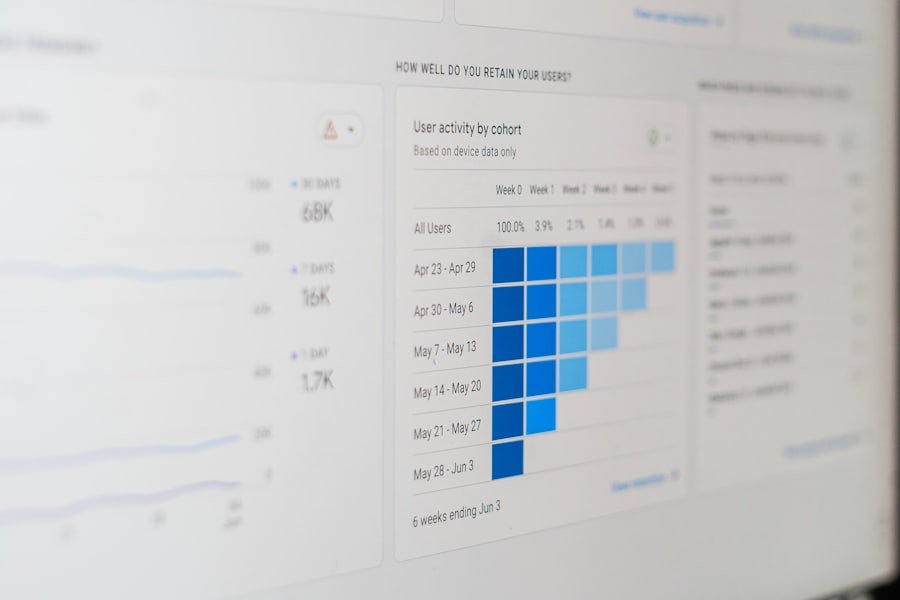
The fundamental difference lies in what you’re building and how you’re using it. Reporting provides data aggregates; Revenue Intelligence builds a resilient, adaptable revenue architecture.
Reporting: The Data Dump
Think of reporting as collecting raw materials. You have lumber, nails, and paint. You can see what you have, but you don’t necessarily have a blueprint for a structurally sound building. This raw data, when presented in reports, is often a collection of facts looking for meaning.
Revenue Intelligence: The Blueprint and the Builder
Revenue Intelligence is the blueprint, the construction plan, and the foreman overseeing the job. It defines how these raw materials fit together to create a functional, predictable structure. It dictates the flow of information, the dependencies between teams, and the predictable pathways to revenue realization. It’s about understanding the interdependencies within your revenue generation process.
This architectural approach is critical for Scale. A simple shed requires less intricate planning than a multi-story commercial building. Similarly, as your company grows from $10M to $100M, haphazard data aggregation will break. A robust revenue architecture, built on intelligence, is essential.
Key Frameworks Empowered by Revenue Intelligence

To move beyond reporting and embrace intelligence, executives must understand the frameworks that underpin its power. These focus on optimizing the system of revenue generation.
Revenue Architecture Framework
This framework views revenue generation not as a collection of disparate activities, but as an interconnected system. It comprises distinct but interdependent components:
- Demand Generation: How effectively are you attracting potential customers?
- Pipeline Management: How efficiently are you moving prospects through the sales cycle?
- Customer Success & Expansion: How well are you retaining and growing existing customer value?
- Financial Operations & Forecasting: How accurately are you predicting, budgeting, and managing revenue?
- Organizational Alignment: Are all teams working collaboratively towards shared revenue goals?
Revenue Intelligence operationalizes this framework by providing insights into the performance and interactions of each component.
Capital Efficiency Metrics
For companies aiming for profitable growth, capital efficiency is paramount. Reporting might show marketing spend and associated revenue, but Revenue Intelligence allows for granular analysis of ROI by channel, campaign, and even individual sales rep.
- Customer Acquisition Cost (CAC) Optimization: Understanding precisely which marketing and sales efforts yield the lowest CAC for high-value customers. This moves beyond an average CAC to understanding what specific actions create efficient acquisition.
- Customer Lifetime Value (CLTV) Maximization: Identifying customer segments with the highest CLTV and tailoring acquisition and retention strategies accordingly. Revenue Intelligence helps forecast CLTV based on early engagement and behavior, not just past averages.
- Sales Cycle Optimization: Analyzing bottlenecks in the sales process that inflate sales cycles and thus tie up capital unnecessarily. This allows for targeted interventions to accelerate deal closures.
Forecasting Discipline Models
Accurate forecasting is the bedrock of financial stability and strategic planning. Revenue Intelligence transforms forecasting from an art into a science.
- Pipeline Health Scoring: Assigning AI-driven scores to opportunities based on an array of factors (engagement, stage, stakeholder interest, historical conversion probabilities), providing a realistic view of pipeline strength. This is far more nuanced than a simple pipeline dollar amount.
- Scenario-Based Forecasting: Developing multiple revenue forecasts based on different assumptions (e.g., best-case, worst-case, most-likely scenarios). This prepares leadership for various outcomes and allows for pre-defined contingency plans.
- Forecast Accuracy Monitoring: Continuously tracking forecast accuracy against actuals, identifying patterns in misforecasts, and feeding insights back into the forecasting model for iterative improvement.
Understanding the distinction between reporting and revenue intelligence is crucial for businesses aiming to optimize their financial strategies. For those interested in enhancing operational efficiency, a related article discusses various strategies that small and medium enterprises can implement to improve their overall performance. You can read more about these strategies in this insightful piece on operational efficiency. By integrating the concepts of revenue intelligence, companies can make more informed decisions that drive growth and profitability.
Actionable Executive Insights: Bridging the Gap
| Aspect | Reporting | Revenue Intelligence |
|---|---|---|
| Focus | Historical data and performance | Real-time data and performance |
| Usage | Used for tracking and analyzing past activities | Used for making real-time decisions and predictions |
| Insights | Provides insights into what happened | Provides insights into what will happen |
| Integration | Often standalone or integrated with basic CRM systems | Integrated with advanced CRM and sales systems |
| Impact | Helps in understanding past performance | Helps in driving future revenue growth |
Moving from reporting to Revenue Intelligence requires a shift in mindset and a commitment to data-driven decision-making across all revenue-generating functions.
For CMOs: From Campaign Metrics to Revenue Drivers
- Insight: Shift focus from vanity metrics (e.g., website visits, open rates) to engagement that predicts future purchase intent and revenue generation.
- Action: Implement multi-touch attribution to understand the true ROI of marketing channels and campaigns. Prioritize the optimization of channels that demonstrate a clear correlation with high-value customer acquisition and retention. Benchmark marketing efforts not just against past performance, but against predictable revenue contributions.
- Strategic Value: Maximize marketing ROI, justify budget, and align marketing efforts directly with predictable revenue growth, rather than vanity metrics.
For CFOs: From Budget Variance to Capital Efficiency
- Insight: Understand the capital efficiency of every dollar spent across the revenue funnel, identifying where investment drives the highest predictable returns.
- Action: Leverage Revenue Intelligence to precisely measure CAC by segment and channel, and to forecast CLTV more accurately. Use this data to reallocate spend from underperforming areas to those demonstrating superior capital efficiency. Build financial models that incorporate predictive revenue forecasting for more precise budgeting and resource allocation.
- Strategic Value: Ensure profitable growth, optimize resource allocation, and provide greater financial predictability to the board and investors.
For Founders: From Gut Feel to Data-Backed Strategy
- Insight: Empower strategic decisions with objective, predictive insights that de-risk growth initiatives and identify new opportunities.
- Action: Build a unified view of your entire revenue ecosystem. Use Revenue Intelligence to validate strategic hypotheses about market segments, customer value, and growth levers before significant capital is committed. Foster a culture that prioritizes data-informed strategy over anecdotal evidence.
- Strategic Value: Accelerate informed decision-making, de-risk strategic bets, and build a scalable, predictable growth engine.
For RevOps Leaders: From Data Wrangling to Revenue Architecture
- Insight: Transition from simply reporting data to architecting the systems and processes that enable reliable revenue generation and intelligent decision-making.
- Action: Champion the integration of disparate data sources into a single source of truth for revenue intelligence. Implement and refine attribution models, sales forecasting tools, and pipeline scoring mechanisms. Collaborate closely with Marketing, Sales, and Finance to ensure data integrity and consistent application of intelligence across the organization.
- Strategic Value: Drive operational excellence, improve cross-functional collaboration, and create a scalable foundation for predictable, profitable revenue growth.
The Polayads Advantage: Building Your Revenue Intelligence Engine
The difference between mere reporting and transformative Revenue Intelligence is not incremental; it’s fundamental to achieving predictable, profitable growth. Reporting is looking in the rearview mirror. Revenue Intelligence is piloting your ship with precision, leveraging the most advanced navigational tools to reach your destination.
At Polayads, we don’t just provide data; we build your company’s revenue intelligence engine. We architect your revenue architecture, ensuring every component works in harmony to drive predictable growth. For companies scaling from $10M to $100M, this strategic shift is not an option; it’s a necessity. We empower CMOs, CFOs, Founders, and RevOps leaders with the clarity and control needed to navigate complex markets and achieve sustained, profitable expansion.
Executive Summary:
Current reporting practices, focused on historical data, create an illusion of control and a reactive approach to revenue generation. This leads to missed projections and strained financials. Revenue Intelligence, in contrast, leverages integrated data and advanced analytics to provide predictive insights, enabling proactive optimization of the entire revenue funnel. Key frameworks like Revenue Architecture, Capital Efficiency, and Forecasting Discipline, when operationalized by Revenue Intelligence, transform data into actionable strategies for predictable, profitable growth. CMOs, CFOs, Founders, and RevOps leaders must shift their focus from reporting on what was to intelligently shaping what will be.
The future of profitable growth isn’t about seeing the past more clearly; it’s about intelligently shaping your future. Polayads is your partner in building that future with robust Revenue Intelligence.
FAQs
What is reporting?
Reporting is the process of collecting and presenting data in a structured format to provide insights and information about a specific aspect of a business, such as sales, marketing, or financial performance.
What is revenue intelligence?
Revenue intelligence refers to the process of using data and insights to optimize and improve the overall revenue generation of a business. This includes analyzing customer behavior, sales performance, and market trends to make informed decisions that drive revenue growth.
What are the key differences between reporting and revenue intelligence?
Reporting focuses on presenting historical data and performance metrics, while revenue intelligence involves using data to drive strategic decision-making and optimize revenue generation. Reporting provides a snapshot of past performance, while revenue intelligence looks to the future and aims to improve revenue outcomes.
How can reporting benefit a business?
Reporting can benefit a business by providing valuable insights into past performance, identifying trends, and highlighting areas for improvement. It can help businesses track progress towards goals, make informed decisions, and communicate performance to stakeholders.
How can revenue intelligence benefit a business?
Revenue intelligence can benefit a business by providing actionable insights that drive revenue growth, improve customer relationships, and optimize sales and marketing strategies. It can help businesses identify new opportunities, reduce churn, and increase overall profitability.