
The chasm between sales promises and financial reality is a persistent vulnerability for growth-stage companies. Many CMOs, CFOs, and founders grapple with the fallout: missed targets, bloated marketing spend, and a general lack of clarity on what truly drives profitable revenue. This isn’t a cyclical downturn; it’s a symptom of a misaligned revenue engine, where insights are siloed and critical financial levers remain untapped. The solution lies not in more marketing activity, but in fundamentally reshaping how revenue intelligence is governed and leveraged.
The strategic imperative is clear: Revenue Intelligence must align with the CFO’s mandate for financial stewardship and profitable growth. This requires a paradigm shift, moving Revenue Intelligence from a departmental function to a core financial discipline. When positioned under the CFO, Revenue Intelligence transforms from a descriptive reporting tool into a prescriptive engine for capital efficiency, margin expansion, and predictable revenue generation.
This integration addresses the fundamental challenge of translating market signals into actionable financial strategies. Without CFO oversight, Revenue Intelligence can become a disconnected exercise, focusing on vanity metrics or sales velocity at the expense of profitability. The CFO’s involvement ensures that every revenue insight is scrutinized through the lens of return on investment, cost of customer acquisition, and lifetime value. This isn’t about micromanaging marketing; it’s about ensuring that revenue-generating initiatives are meticulously mapped to financial outcomes, fostering a culture of disciplined growth.
For companies navigating the complexities of scaling from $10 million to $100 million, predictable revenue forecasting is paramount. Yet, many struggle with the disconnect between sales forecasts and actual financial performance. This often stems from a lack of centralized financial oversight on the data and methodologies feeding these forecasts. When Revenue Intelligence resides solely within marketing or sales, it can become detached from the rigorous financial discipline required for accurate P&L management.
Bridging the Forecasting Gap
Sales teams often operate with optimism, projecting future performance based on pipeline strength and historical conversion rates. Marketing teams, similarly, focus on lead generation, campaign ROI, and brand visibility. The CFO, however, is solely accountable for the company’s financial health, requiring a forecast that is both ambitious and grounded in economic reality.
- Pipeline vs. P&L Impact: A healthy sales pipeline is a leading indicator, but its ultimate impact on the Profit and Loss statement requires careful financial modeling. Without CFO involvement, marketing efforts might drive volume that doesn’t translate into profitable revenue, impacting gross margins and cash flow.
- Attribution Integrity and Financial Impact: True attribution integrity isn’t just about which channel closed a deal. It’s about understanding the cost of acquiring that customer through each channel and its contribution to overall profitability. The CFO’s perspective is crucial in defining what constitutes a “successful” attribution – one that supports margin expansion, not just revenue volume.
- Scenario Planning and Risk Mitigation: A CFO-led Revenue Intelligence function can integrate sophisticated scenario planning, assessing the financial implications of various market shifts, competitive pressures, or operational changes on revenue projections. This proactive risk mitigation is vital for achieving sustainable, profitable growth.
In the discussion about why revenue intelligence should report to the CFO, it is also valuable to explore the broader implications of effective brand positioning within a company. A related article that delves into this topic is “Brand Positioning Development” which highlights the importance of aligning financial strategies with brand identity to drive overall business success. You can read more about it here: Brand Positioning Development. This connection emphasizes how strategic financial oversight can enhance brand value and ultimately contribute to revenue growth.
Optimizing Capital Efficiency Through Revenue Intelligence
The growth phase, particularly for companies between $10 million and $100 million, demands extreme capital efficiency. Every dollar spent on customer acquisition, marketing, and sales must yield a demonstrable and profitable return. When Revenue Intelligence is tethered to the CFO’s office, this efficiency becomes an inherent output, not an aspirational goal.
The CFO’s Mandate: ROI and Margin Expansion
CFOs are incentivized to maximize the return on invested capital. This means scrutinizing every expense, especially those directly impacting revenue generation. Revenue Intelligence, when housed within their purview, becomes a powerful tool for identifying and amplifying high-ROI activities, while ruthlessly cutting low-performing ones.
- Customer Acquisition Cost (CAC) Optimization: The CFO’s primary focus on CAC is amplified by granular Revenue Intelligence. By understanding the true cost of acquiring customers across different segments and channels, and correlating this with their Lifetime Value (LTV), the CFO can direct investments towards the most profitable acquisition strategies. This moves beyond simple CAC reporting to a more sophisticated LTV:CAC ratio analysis that directly impacts shareholder value.
- Marketing Spend Alignment with Profitability: Marketing campaigns are often judged by lead volume or engagement. The CFO, however, measures marketing success by its contribution to profitable revenue. Revenue Intelligence under CFO oversight ensures that marketing investments are directly traceable to sales qualified leads (SQLs), opportunities, and ultimately, closed-won deals that meet predefined margin targets. This linkage prevents wasteful spending on activities that don’t contribute to the bottom line.
- Identifying Drivers of Margin Expansion: Gross margin is a critical indicator of a business’s health and its ability to fund further growth. Revenue Intelligence, when analyzed through a financial lens, can reveal which customer segments, product bundles, or sales methodologies drive higher margins. This insight empowers the CFO to strategically allocate resources to these profitable areas, accelerating margin expansion and solidifying financial stability.
Ensuring Attribution Integrity for Strategic Investment Decisions

The notion of attribution integrity within Revenue Intelligence is a persistent challenge for many companies. Without a unifying financial framework, marketing teams might assign credit to the last touch, sales teams to the first opportunity, and RevOps to a complex multi-touch model – often leading to conflicting narratives and misallocation of resources. Placing Revenue Intelligence under the CFO rectifies this by introducing a singular, financially driven definition of attribution.
The CFO’s View: Revenue Contribution and Investment Justification
For the CFO, attribution is not just about acknowledging a channel’s role; it’s about justifying the investment made in that channel based on its verifiable financial contribution. This requires a robust system that can accurately trace revenue back to its origins and assess the efficacy of each touchpoint in driving profitable outcomes.
- Financial Attribution Models: Beyond basic first-touch or last-touch models, the CFO requires attribution that quantifies the financial impact of each stage of the buyer’s journey. This involves understanding the cost of generating each lead, nurturing it, and converting it into a paying customer, all while factoring in potential upsell and cross-sell opportunities. Polayads’ approach emphasizes Revenue Architecture, where each customer touchpoint is evaluated for its financial leverage.
- Investment Justification for Growth Channels: When Revenue Intelligence reports to the CFO, marketing budgets are no longer allocated based on historical practice or departmental wish lists. Instead, investments are justified by data demonstrating a clear and quantifiable ROI. Under CFO guidance, attribution data becomes the foundation for approving or rejecting new marketing initiatives, ensuring that capital is deployed strategically.
- Preventing Blame Gaming and Fostering Collaboration: Siloed Revenue Intelligence often leads to finger-pointing when targets are missed. A CFO-led approach fosters a unified understanding of revenue generation, where attribution data highlights the interconnectedness of all revenue-driving functions. This promotes collaboration between sales, marketing, and operations, all working towards common, financially sound objectives.
Driving Organizational Alignment Around Profitable Growth Metrics
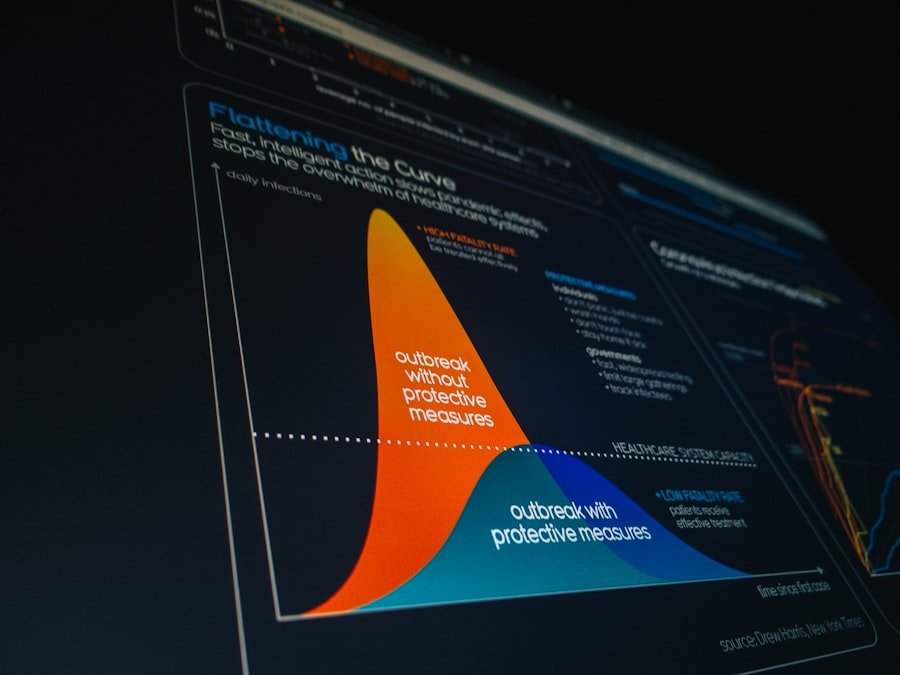
Achieving organizational alignment is a perennial challenge for companies in hyper-growth phases. Different departments often chase different goals, leading to inefficiencies and a lack of cohesive strategy. When Revenue Intelligence is anchored within the CFO’s domain, it becomes a universal language for success, driving alignment around metrics that truly matter for predictable, profitable growth.
The CFO’s Role in Unifying Objectives
The CFO represents the financial health of the entire organization. By leveraging Revenue Intelligence, they can create a shared understanding of what constitutes success, ensuring that all teams are working towards the same financially driven objectives. This moves beyond departmental KPIs to a company-wide focus on sustainable revenue expansion.
- Shared Revenue Architecture and Accountability: A CFO-led Revenue Intelligence function champions a holistic revenue architecture. This means all teams, from marketing and sales to product and customer success, are aligned on the customer journey and their respective contributions to profitable revenue realization. Accountability is then based on clearly defined financial outcomes rather than isolated departmental achievements.
- Data-Driven Decision-Making Across Departments: When revenue data is presented and governed by the CFO, it becomes a non-negotiable basis for decision-making across the entire organization. This eliminates subjective opinions and fosters a data-driven culture where strategic choices are supported by clear financial insights and revenue projections.
- Executive Alignment on Growth Modeling: Polayads’ expertise in growth modeling relies on accurate, well-governed data. By reporting to the CFO, Revenue Intelligence ensures that the foundational data for sophisticated growth modeling is robust, financially sound, and free from departmental bias. This enables founders and the executive team to make informed, strategic decisions about resource allocation, market entry, and long-term financial planning.
In the discussion of why revenue intelligence should report to the CFO, it is essential to consider the broader implications of financial oversight on customer engagement strategies. A related article that delves into the importance of understanding customer journeys and optimizing experiences can be found at this link. By aligning revenue intelligence with insights from customer journey mapping, organizations can enhance their financial strategies and drive sustainable growth.
The Strategic Advantage of CFO-Led Revenue Intelligence
| Metrics | Importance |
|---|---|
| Revenue growth | Understanding the impact of revenue intelligence on overall growth |
| Customer acquisition cost | Insight into the cost of acquiring new customers and how revenue intelligence can optimize this |
| Customer lifetime value | Understanding the long-term value of customers and how revenue intelligence can impact this |
| Sales pipeline velocity | Measuring the speed at which leads move through the sales pipeline and the role of revenue intelligence in accelerating this |
| Profit margins | Insight into the impact of revenue intelligence on improving profit margins |
The benefits of placing Revenue Intelligence under the CFO extend beyond just financial accuracy. It fundamentally reshapes how a company approaches growth, instilling discipline, optimizing resource allocation, and fostering a culture of accountability that is directly linked to financial outcomes. This strategic positioning is no longer a nice-to-have; it’s an essential component of building a scalable, predictably profitable business.
Actionable Executive Insights for Predictable Growth
Polayads witnesses firsthand the transformative power of integrating Revenue Intelligence with financial leadership. The insights generated under CFO oversight move beyond descriptive analytics to provide actionable guidance for executive teams seeking to navigate the complexities of scaling.
- Predictive Forecasting with Financial Guardrails: A CFO-led function can combine sophisticated Revenue Intelligence with financial models to produce forecasts that are not only accurate but also financially responsible. This means understanding the profit margins associated with projected revenue and ensuring that growth targets are achievable without sacrificing profitability.
- Margin Expansion Strategies Driven by Data: By meticulously analyzing customer lifetime value, acquisition costs, and operational efficiencies, the CFO can leverage Revenue Intelligence to identify and implement strategies for sustained margin expansion. This might involve optimizing pricing, targeting higher-margin customer segments, or streamlining operational costs.
- Capital Allocation for Maximum ROI: The CFO’s direct oversight of Revenue Intelligence ensures that capital is allocated to the highest-impact revenue-generating activities. This data-informed approach to investment decisions drives superior returns and strengthens the company’s overall financial health.
For companies striving for predictable, profitable growth in the $10M–$100M range, the alignment of Revenue Intelligence with the CFO’s office is a non-negotiable strategic advantage. It’s the bedrock upon which sound financial stewardship and sustainable revenue architecture are built. Polayads specializes in building this integrated approach, empowering leaders to unlock their company’s full revenue potential with clarity and confidence.
FAQs
What is Revenue Intelligence?
Revenue Intelligence refers to the process of gathering and analyzing data related to a company’s sales and revenue generation activities. This includes data on customer interactions, sales performance, and market trends.
Why should Revenue Intelligence report to the CFO?
Reporting Revenue Intelligence to the CFO ensures that the financial leader has access to critical data and insights that can directly impact the company’s bottom line. It also allows for better alignment between sales and finance teams, leading to more informed decision-making.
What are the benefits of having Revenue Intelligence report to the CFO?
Having Revenue Intelligence report to the CFO can lead to improved financial forecasting, better understanding of customer behavior, and more accurate revenue projections. It also allows for a more strategic approach to revenue management and optimization.
How does Revenue Intelligence impact financial decision-making?
Revenue Intelligence provides valuable insights into sales performance, customer trends, and market dynamics, which directly impact financial decision-making. This data can help the CFO make informed decisions about pricing strategies, resource allocation, and revenue growth opportunities.
What are the potential challenges of having Revenue Intelligence report to the CFO?
One potential challenge is ensuring that the CFO has the necessary expertise to interpret and leverage Revenue Intelligence data effectively. Additionally, there may be organizational resistance to changing reporting structures and integrating sales and finance functions.