
Choosing a therapist is personal. People read carefully, often late at night, looking for signs that you’re the right person for what they’re going through. A therapy website doesn’t need to be clever. It needs to be warm, clear and honest, and to make the first step easy.
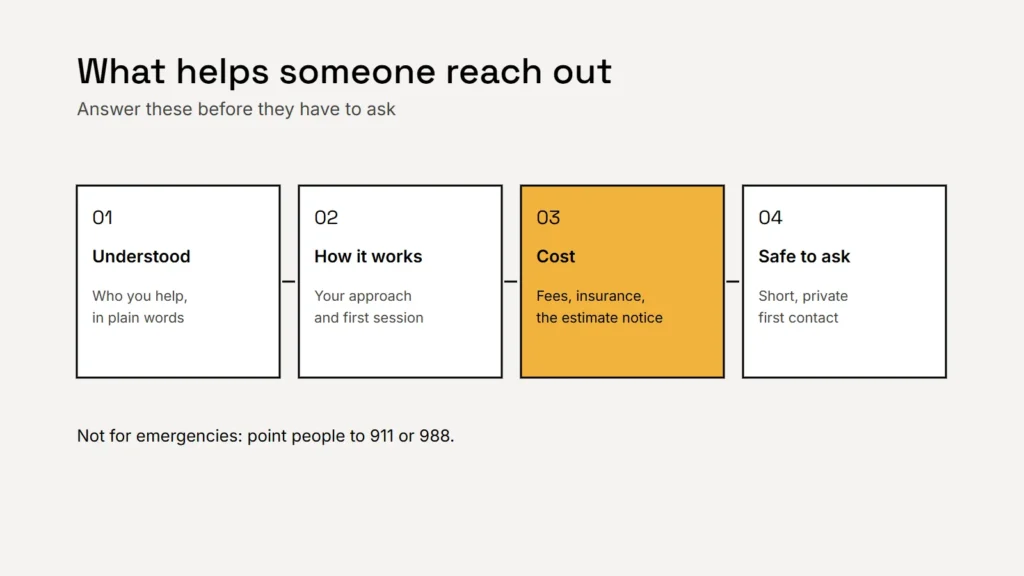
Say who you help, and how
- The people and problems you work with, in plain words: anxiety, couples, grief, trauma, teens or whatever your focus is. Each main area can have its own page.
- Your approach, explained without jargon. If you use a specific method, say what a session is actually like.
- Who you are: a warm photo, your license and credentials stated accurately, and a short note in your own voice about why you do this work.
- Practical details: in person, online or both, the states you’re licensed in for telehealth, and your availability.
Key takeaway
People choose a therapist they feel understood by. Write the way you speak in a first session.
Fees, insurance and the good faith estimate
Uncertainty about cost stops many people from reaching out. State your session fee, whether you’re in network with any insurers, and, if you’re out of network, whether you provide superbills for clients to claim reimbursement. Offer sliding scale places only if you really have them.
Under the No Surprises Act, health care providers must give uninsured and self pay clients a good faith estimate of expected charges, and the federal rules (45 CFR 149.610) require providers to make information about this right available, including on their website. Most therapists add a short notice to their fees page. CMS has resources for providers.
A clear fees page is an act of care. It removes one of the biggest reasons people delay asking for help.
A first contact that feels safe and private
- Offer a free consultation call, if you do them, and explain what it involves.
- Keep the contact form short, and ask people not to share sensitive details until you’ve spoken.
- Say when you usually reply.
- Be careful with tracking tools and advertising pixels on contact and booking pages. Our guide to privacy, tracking and forms for therapy practices explains what to check.
Crisis information
Make it clear that your website and contact form aren’t for emergencies. Point people in crisis to 911 or the 988 Suicide & Crisis Lifeline, which anyone in the US can call or text at 988. Put this in your footer and near your contact form.
Directories and your own site
Directory profiles help people find you, but your own website is where they get to know you. Link your profiles to your site, keep your details the same everywhere, and make your website the place with the full picture. Our local search guide covers the basics.
Checklist
- Who you help and how, in plain words.
- An accurate, warm introduction and credentials.
- Fees, insurance and superbill details.
- The good faith estimate notice.
- A short, private first contact.
- Crisis information in the footer and near forms.
Related service
Calm, accessible websites for therapists and counseling practices, with privacy aware forms and clear information that helps the right clients reach out.