Most businesses redesign because the website has stopped doing its job. It looks dated, it’s awkward on phones, it’s hard to update or it simply doesn’t bring in enquiries any more. The cost depends less on how the new site looks and more on how much has to be rebuilt underneath.
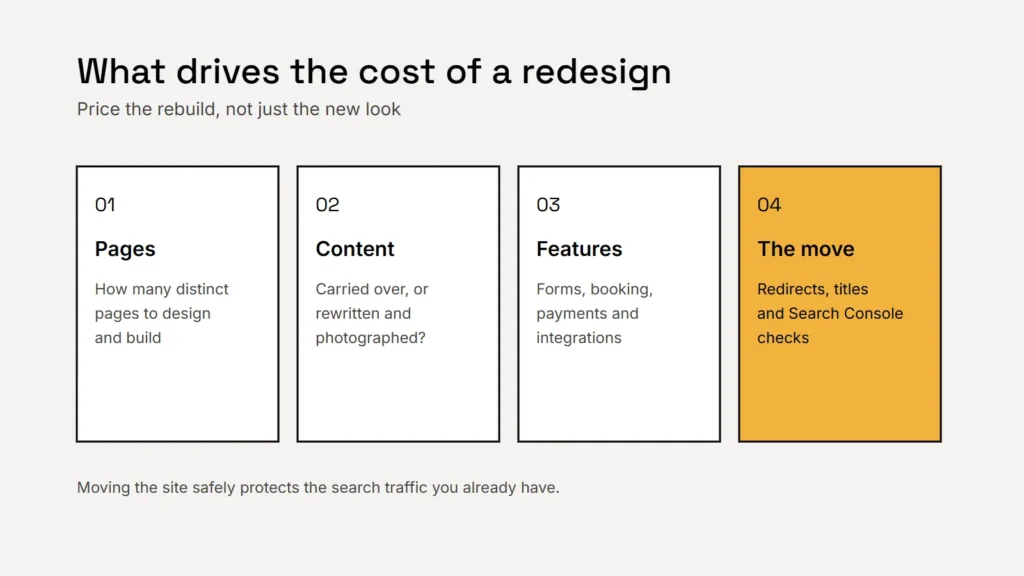
The four things that drive the price
- The number of pages. Each distinct page type (home, service pages, about, contact, location pages) needs to be designed, built and tested. A 5-page site and a 40-page site are very different projects.
- The state of your content. If your existing words and photos can be carried over, the job is mostly design and build. If key pages need rewriting, copywriting becomes a real part of the cost.
- Features. A contact form is simple. Online booking, quote forms with uploads, payments, member areas or connections to other software add time and testing.
- Moving the site safely. Mapping every old page address to its new one, carrying over titles and descriptions, and checking Search Console after launch. This protects the search traffic you already have.
Key takeaway
A redesign is priced by what has to be rebuilt: pages, content, features and the move itself. The new look is only part of it.
Typical price ranges
Prices vary widely across the industry, from a few hundred dollars for a template refresh to tens of thousands for a large custom site. For most small service businesses, the realistic choice sits between a refreshed template and a professionally designed, fixed-scope site.
As a concrete example, these are our own fixed-scope packages, which apply to redesigns as well as new sites:
| Package | Price | Pages | Typical timeline |
|---|---|---|---|
| Starter | $1,499 | Up to 5 | 2–3 weeks |
| Business Growth | $2,999 | Up to 10 | 3–5 weeks |
| Premium | $4,999 | Up to 20 | 5–7 weeks |
Whoever you hire, make sure the quote states which pages are included, who supplies the content and what happens to your existing page addresses.
The costs people forget
| Cost | Why it matters |
|---|---|
| Redirects and search checks | Without a redirect for every changed page address, visitors and Google hit dead pages and rankings can drop |
| Copywriting | Old pages often need rewriting to win enquiries; packages usually cover adding your words, not writing them |
| Photography | Real photos of your team and work build more trust than stock images |
| Licences | Premium themes, plugins and fonts may need new licences on the new site |
| Running costs | Hosting, domain and email continue; check renewal prices if you switch providers |
| Your team’s time | Feedback, approvals and gathering content take longer than most owners expect |
The most expensive redesign is the one that throws away the search traffic you already had.
How to keep your Google rankings
Google treats a redesign that changes page addresses as a site move. Its guidance is clear: map old URLs to new ones and use permanent (301) redirects, so visitors and search engines land on the right page. In practice:
- List every page on the current site, and note which ones get search traffic in Search Console.
- Keep the page addresses that work. Only change them for a good reason.
- Redirect every changed address to its closest new equivalent, not to the home page.
- Carry over page titles, descriptions and the content that ranks, improving rather than deleting it.
- After launch, submit the new sitemap and watch Search Console for errors for a few weeks.
Redesign, or fix what you have?
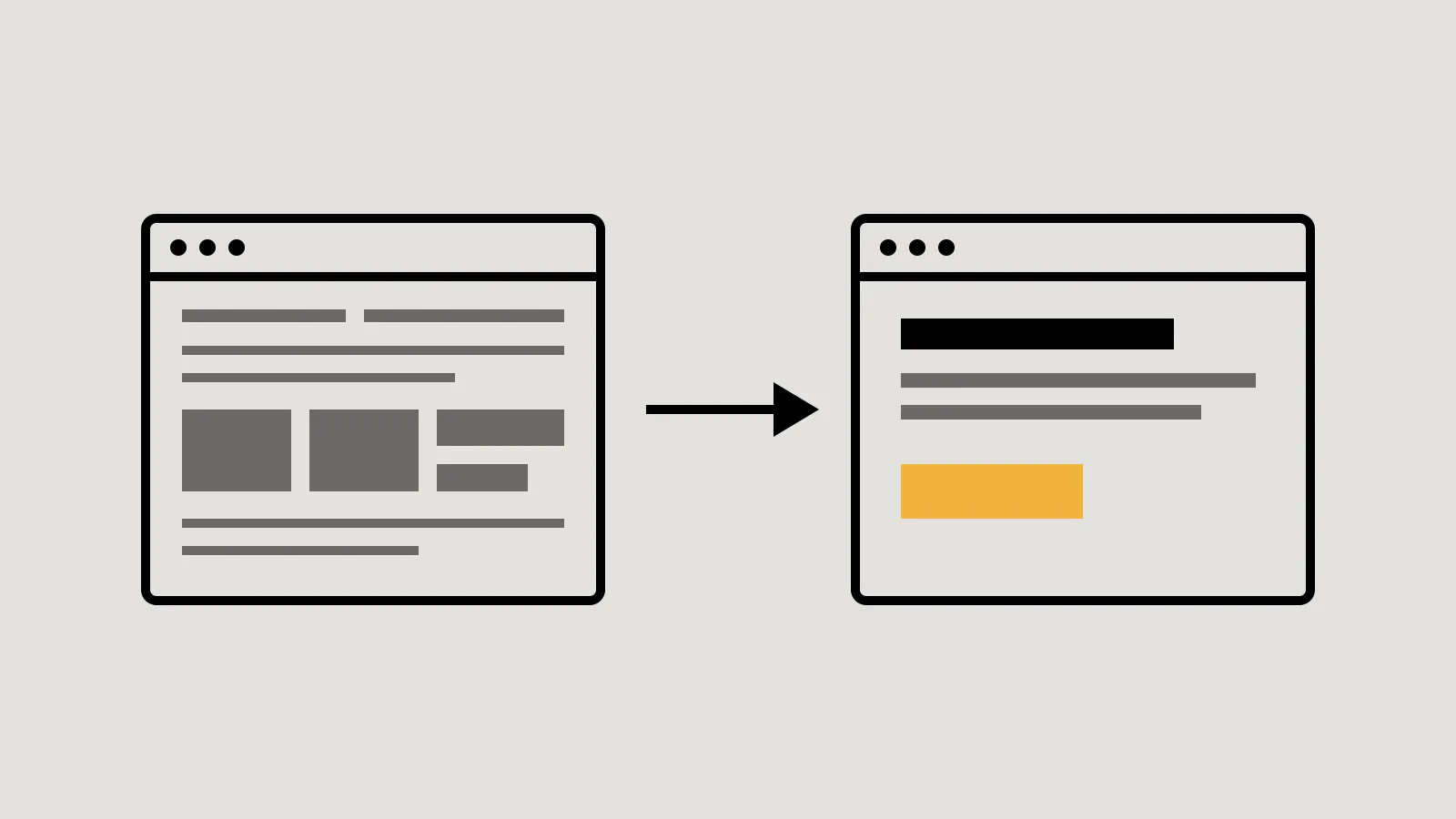
Not every tired website needs a full redesign. If the structure is sound, a few targeted fixes can do more for enquiries than a new look: a clearer first screen, a tappable phone number, a page for each main service and faster loading. A full redesign makes sense when the site is hard to update, broken on phones or built on a platform that holds you back.
If you’re not sure which you need, our free website review tells you honestly, and our checklist for what to check before you redesign helps you prepare.
Checklist
- Price the rebuild, not the look.
- Budget for content, photos and licences.
- Redirect every changed page address.
- Keep what already ranks.
- Consider targeted fixes before a full redesign.
Related service
Redesigns for US small businesses that protect your rankings and bring in more enquiries.