Most homeowners look for a roofer when something has gone wrong, such as a leak or storm damage, or when a large decision is coming, such as a full replacement. Either way, they usually check a few websites before they call. The roofer whose site answers their questions fastest, and looks most trustworthy, gets the inspection.
1. A page for each service
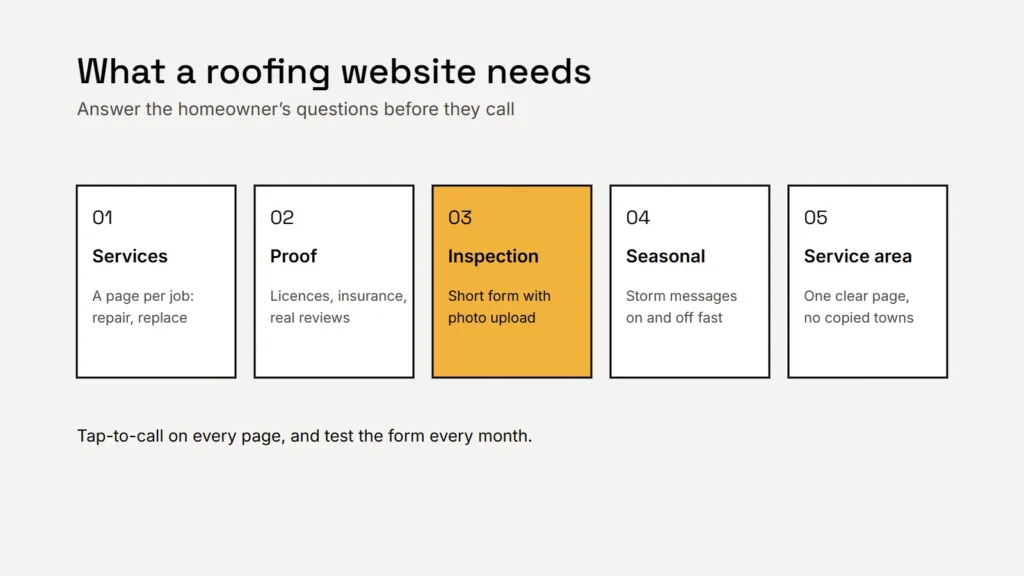
Repairs, full replacements, inspections, gutters and commercial roofing are different jobs with different customers. Give each main service its own page, explaining what’s involved, which materials you work with and what happens at the first visit. Separate pages help customers find what they need and help search engines understand what you offer. See service pages that Google and customers find helpful.
2. Proof that you can be trusted
- Licences and insurance, where your state or town requires them, stated accurately.
- Manufacturer certifications you actually hold, named exactly as the manufacturer names them.
- Real photos of your crews and finished roofs, with the town and the work done.
- Reviews from real customers. The FTC’s rule on fake reviews bans fake or bought reviews and testimonials. See how to ask for reviews the right way.
- Warranties on workmanship and materials, with the terms spelled out.
Key takeaway
Show what makes you safe to hire: licences, insurance, real photos and real reviews.
3. An inspection request that works
Keep the form short: name, phone, address or ZIP code, what’s wrong and an optional photo upload. Photos help you judge urgency before you visit. Put a tappable phone number on every page as well, because many people with a leak would rather call. Test both every month; a broken form costs jobs silently. Our guide to contact forms that work has more.
4. Seasonal and storm-season updates
Demand changes with the weather. Your website should make it easy to switch on a short message about storm repairs, inspections before winter or booking ahead for the busy season, without editing every page. Describe any help with insurance claims exactly as you offer it, and don’t promise outcomes you can’t control.
After a storm, the roofer with the clearest website and the quickest way to call gets the first inspections.
5. Service areas, without spam
Copying the same page for every town you serve can break Google’s spam policies on doorway pages. Instead, list your service area clearly on one page and in your Google Business Profile, which allows up to 20 service areas. Add a page for a specific town only when you have real projects there and something genuinely local to say. Our local search guide explains more.
Checklist
- A page for each main service.
- Licences, insurance, certifications and real reviews.
- A short inspection form with photo upload.
- Tap-to-call on every page.
- Seasonal messages you can switch on quickly.
- One clear service-area page, not dozens of copies.
Related service
Roofing websites built to win inspections and replacements, with project photos, reviews and quote requests that reach you.