Someone searching for a lawyer usually has a specific problem: a divorce, an injury, a business dispute or an estate to plan. They want to know quickly whether you handle that kind of matter, who they would work with and how to take the first step. A law firm website that answers those questions clearly wins more consultation requests.
This is general information, not legal advice. Lawyer advertising rules vary by state, so every page should be reviewed by a responsible attorney at your firm.
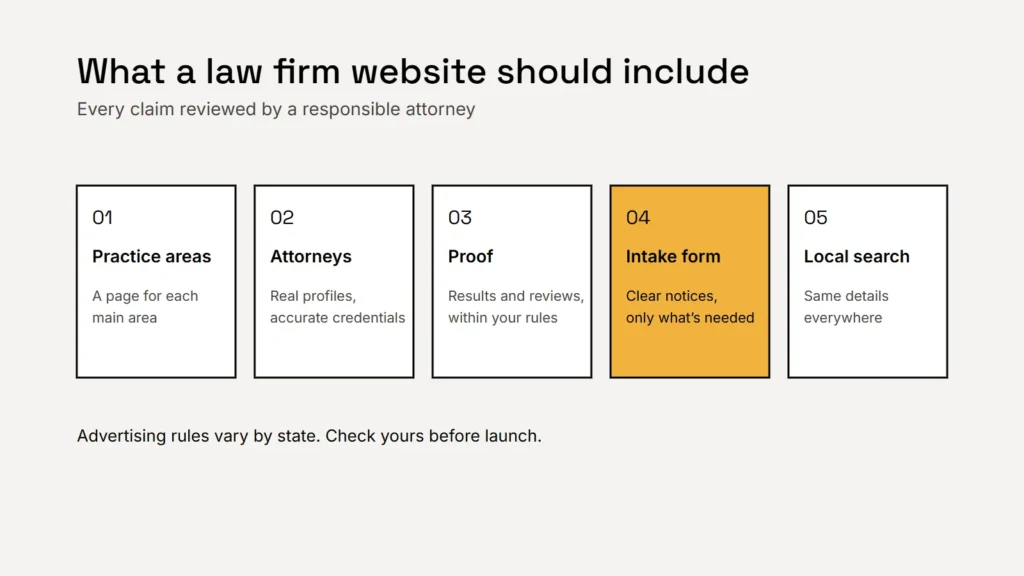
1. A page for each practice area
One “Practice areas” page with a list rarely ranks or convinces. Give each main practice area its own page: who it’s for, the questions clients usually ask, how the process works and what happens at a first consultation. Where your firm handles several types of matter within an area, such as different kinds of injury claims, add pages for those too, as long as each has something genuinely different to say. See service pages that Google and clients find helpful.
2. Real attorney profiles
- A clear, recent photo of each attorney.
- Bar admissions, education and the practice areas they handle, stated accurately.
- A short, human introduction: why they practise this area of law and how they work with clients.
- Languages spoken and how to contact them or book a consultation.
Key takeaway
Clients hire people, not logos. Real profiles do a lot of the selling.
3. Proof, with careful claims
The ABA’s Model Rule 7.1 says a lawyer must not make false or misleading communications about the lawyer or the lawyer’s services, and each state has its own version of the rules. Model Rule 7.2 also requires advertising to include the name and contact information of at least one lawyer or law firm responsible for its content. In practice:
- Avoid words like “best”, “guaranteed” or “expert” unless your state’s rules allow them and you can support them.
- If you show case results or testimonials, check how your state requires them to be presented, including any disclaimers.
- Use real reviews only, and ask for them in a way your rules permit. See how to ask for reviews.
- Keep awards and memberships accurate, with the year and the organisation named.
On a law firm website, every claim should be one a responsible attorney is happy to sign off.
4. An intake form with the right notices
An online form is often the first contact. The ABA’s Formal Opinion 10-457 on lawyer websites notes that websites inviting inquiries may create a prospective client relationship under Model Rule 1.18, so firms should manage inquiries carefully. Many firms:
- Explain near the form that sending it doesn’t create an attorney-client relationship.
- Ask visitors not to include confidential details until a conflict check is done.
- Collect only what’s needed: name, contact details, the type of matter and a short description.
- Send enquiries to a monitored inbox, and reply quickly.
Ask your firm’s responsible attorney to approve the exact wording for your state. Our guide to contact forms that work covers the technical side.
5. Local search basics
Most clients look for a lawyer near them. Keep your firm’s name, address and phone number the same on your website, Google Business Profile and directories, and give each office its own clear contact details. Our guides to local search and structured data explain how.
Checklist
- A page for each main practice area.
- Real attorney profiles with accurate credentials.
- Claims and results reviewed against your state’s rules.
- A responsible lawyer or firm named in your advertising.
- An intake form with clear notices.
- Consistent details for local search.
Related service
Law firm websites with practice-area pages, attorney profiles and consultation requests, reviewed by your firm before launch.
Sources
- American Bar Association: Model Rule 7.1, Communications Concerning a Lawyer’s Services
- American Bar Association: Model Rule 7.2, Communications Concerning a Lawyer’s Services: Specific Rules
- American Bar Association: Formal Ethics Opinion 10-457, Lawyer Websites
- Google Business Profile Help: Guidelines for representing your business on Google